
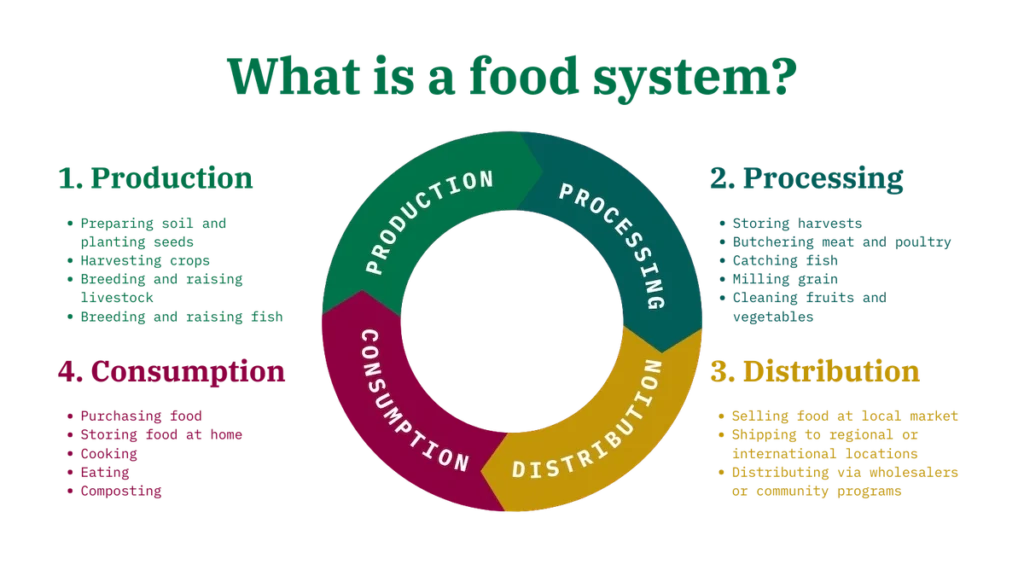
Ever stopped to wonder where your food really comes from? I mean, beyond the supermarket aisle? It’s easy to grab a packet of chips or a shiny apple without a second thought. But here’s the thing: our food systems are complex, interconnected webs that have a massive impact on everything from our health to the planet’s well-being. So, let’s dive in, shall we?
The Hidden Costs of Cheap Food
We all love a good bargain, especially when it comes to food. But are those rock-bottom prices hiding something? Often, the answer is a resounding yes. The push for cheap food often leads to unsustainable farming practices. Think about it: monoculture farming (growing the same crop repeatedly) depletes the soil, requires heavy doses of pesticides and fertilizers, and reduces biodiversity. It’s like asking the earth to give and give without ever replenishing it. According to the Food and Agriculture Organization (FAO) , unsustainable agriculture contributes significantly to deforestation and greenhouse gas emissions. This has long-term implications for climate change and ecosystem health. The impact of unsustainable food production is devastating and far reaching.
And it’s not just about the environment. Cheap food can also have a human cost. Workers on farms and in processing plants may face low wages, poor working conditions, and exposure to harmful chemicals. So, next time you see a dirt-cheap product, take a moment to consider the true price behind it.
The Rise of Sustainable Agriculture: A Glimmer of Hope
But it’s not all doom and gloom! There’s a growing movement towards sustainable agriculture, which aims to produce food in a way that’s both environmentally friendly and socially responsible. What does that look like in practice? Well, it can involve a whole range of techniques, from crop rotation and cover cropping to reduced tillage and integrated pest management. The goal is to create resilient farming systems that can withstand environmental stresses, improve soil health, and reduce reliance on synthetic inputs.
One of the most exciting developments is the growing interest in regenerative agriculture. This approach goes beyond simply minimizing harm; it actively seeks to restore and enhance ecosystems. For instance, farmers might use livestock grazing to improve soil fertility or plant trees to sequester carbon and provide habitat for wildlife. It’s about working with nature, not against it. Food systems and planetary limits.
Food Security in India: A Complex Challenge
In India, the issue of food security is particularly complex. On the one hand, we’ve made significant progress in increasing food production over the past few decades. The Green Revolution, for example, helped to avert widespread famine and transform India into a major agricultural power. But, here’s the catch: this progress has come at a cost. Over-reliance on water-intensive crops like rice and wheat has led to depletion of groundwater resources in many regions. Excessive use of fertilizers and pesticides has polluted soils and waterways. What’s more, many smallholder farmers still struggle to make a decent living, and food insecurity remains a major problem for vulnerable populations.
The challenge now is to transition to a more sustainable and equitable food system. This will require a multi-pronged approach that includes promoting climate-resilient crops, improving irrigation efficiency, empowering smallholder farmers, and strengthening social safety nets. As a nation, we can make a huge difference!
Food Waste: A Moral and Environmental Scandal
Let’s be honest: most of us are guilty of wasting food from time to time. Whether it’s throwing away leftovers or letting fruits and vegetables rot in the fridge, food waste is a massive problem. Globally, about one-third of all food produced is lost or wasted. That’s enough to feed two billion people! The environmental impact of food waste is also staggering. When food ends up in landfills, it decomposes and releases methane, a potent greenhouse gas.
So, what can we do about it? Well, there are plenty of simple steps we can take to reduce food waste at home. Plan your meals carefully, store food properly, use leftovers creatively, and compost food scraps. Support businesses and organizations that are working to reduce food waste throughout the supply chain. Small changes can create a huge impact.
The Power of Conscious Consumption
Ultimately, transforming our food systems will require a shift in our mindset as consumers. We need to move beyond simply seeking the cheapest option and start thinking about the true cost of our food choices. Support local farmers, choose organic and sustainably produced foods, reduce your meat consumption, and be mindful of food waste. These small actions will create a huge impact. By making more conscious choices about what we eat, we can create a food system that is healthier, more equitable, and more sustainable for all. The choices we make as consumers are the most impactful of all!
FAQ Section
Why should I care about food systems?
Because they affect your health, the environment, and the livelihoods of farmers.
What is sustainable agriculture?
It’s farming that minimizes environmental impact and supports social equity.
How can I reduce food waste at home?
Plan meals, store food properly, and compost scraps.
What are the key challenges facing food security in India?
Groundwater depletion, soil degradation, and smallholder farmer livelihoods.
Where can I learn more about food systems?
Check out the Food and Agriculture Organization (FAO) website for stats and reports.
What is the future of food production?
Sustainable practices and mindful consumption!

I’m Vishal Ojha, a passionate blogger, content writer, and web designer with over four years of experience. I have a deep love for sports, especially cricket, and enjoy sharing the latest updates, insights, and analyses from the world of athletics. Every article I publish is carefully researched and fact-checked, ensuring readers get accurate and engaging sports content they can trust.

